01. TL;DR
Most challenge apps focus on completing a goal, but I wanted to make consistency feel more motivating than a checklist. I designed a social challenge experience that combines personal progress with social accountability, helping people choose a goal, track their journey, and stay committed together.
Product Designer
SOLO
TIMEFRAME
5 WEEKS
02. PROBLEM
Thinking beyond the interface.
Motivation is easy to start. Consistency is harder. Starting a goal usually feels exciting. The difficult part comes a few days later when motivation drops and there is no clear sense of progress. Most habit and productivity products focus heavily on tracking the individual. Social platforms, on the other hand, are built around content and engagement. I saw an opportunity between the two.
How might we create a social experience that helps people stay consistent without turning progress into another competition?
03. SOLUTION
Shaping the Experience
Personalized Challenge Discovery
Users begin by selecting topics they actually care about. The app then uses those interests to recommend relevant challenges.
Why
I did not want users to land in an empty feed and figure everything out themselves. Starting with interests creates context immediately and makes the first decision easier.
Daily Progress Sharing
Every update is automatically connected to the user's challenge and day count, giving context without asking users to explain themselves every time.
Why
Posting shouldn't feel like creating content for social media. It should feel like documenting progress.
Community Accountability
Interactions emphasize encouragement over competition. Users follow journeys, celebrate milestones, and support one another without public leaderboards or vanity metrics.
Why
People are more likely to stay committed when others notice their progress.
04. USER RESEARCH
I looked at how people use challenge and habit apps and noticed a common problem: starting a goal is easy, but staying consistent is much harder. The experience often becomes a checklist, with little motivation to come back after the initial excitement wears off.
I focused on understanding what could make the journey feel more rewarding. This led me to three areas I wanted to solve: making progress visible, reducing the effort to keep going, and using social accountability without turning the experience into a popularity contest.
05. DESIGN EXPLORATION
Shaping the Vision
Before settling on the final experience, I explored different ways AI could support learning. Each concept answered the same question differently:
Challenge
Starting was easy, but staying consistent was harder.
Most challenge experiences focus on joining a goal, but the motivation can quickly disappear after the first few days. I wanted to create something that gave users a reason to return, while making their progress feel meaningful.
Progress needed to feel like part of the journey, not just a number.
Users needed to understand what they were working towards, see how far they had come, and feel connected to others going through the same challenge.
Solution
Designing for consistency, not just completion
Instead of treating a challenge as a simple checklist, I designed the experience around three things: a clear starting point, visible progress, and social accountability.
Every part of the experience was designed around one question:
“What will make the user want to come back tomorrow?”
Making onboarding easier to understand
I wanted users to understand the value of the app without reading too much. I broke the introduction into simple messages that explain the core idea and get users started quickly.

Finding a simpler way to start a challenge
I wanted users to start quickly without making too many choices. I explored different flows and broke them into smaller steps, starting with their interests and guiding them to a challenge.

Making progress feel more meaningful
At first, I focused mainly on completion. It felt too much like a tracker, so I explored using progress, streaks, posts, and milestones to make the journey feel more rewarding.

06. DESIGN ITERATIONS
Designing, challenging, and refining the experience
The first direction wasn't solving the problem as well as I thought. Feedback from people familiar with research challenged my assumptions and helped me simplify the experience around how people actually learn.
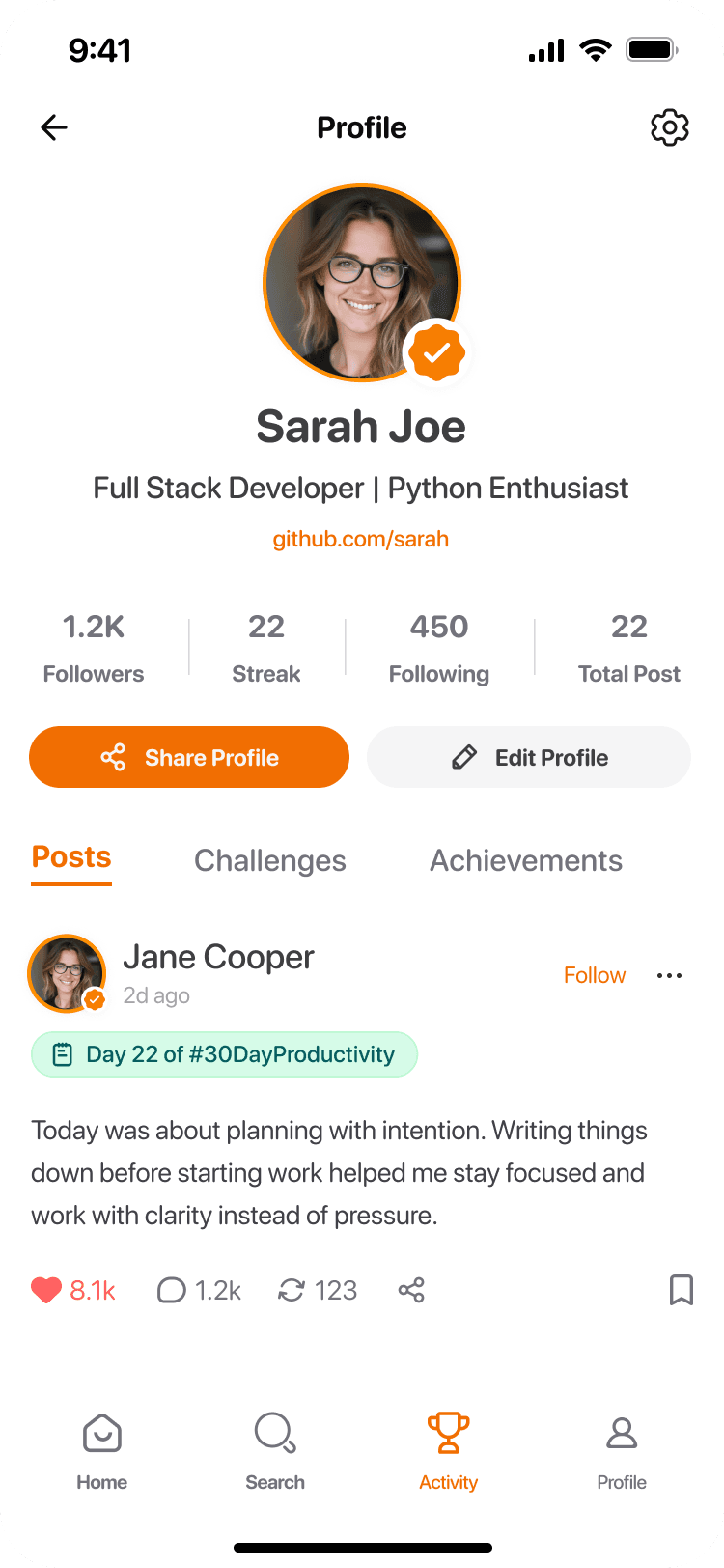
BEFORE
The large progress circle took up most of the space, while the important challenge details were pushed down. There was a lot of information competing for attention.
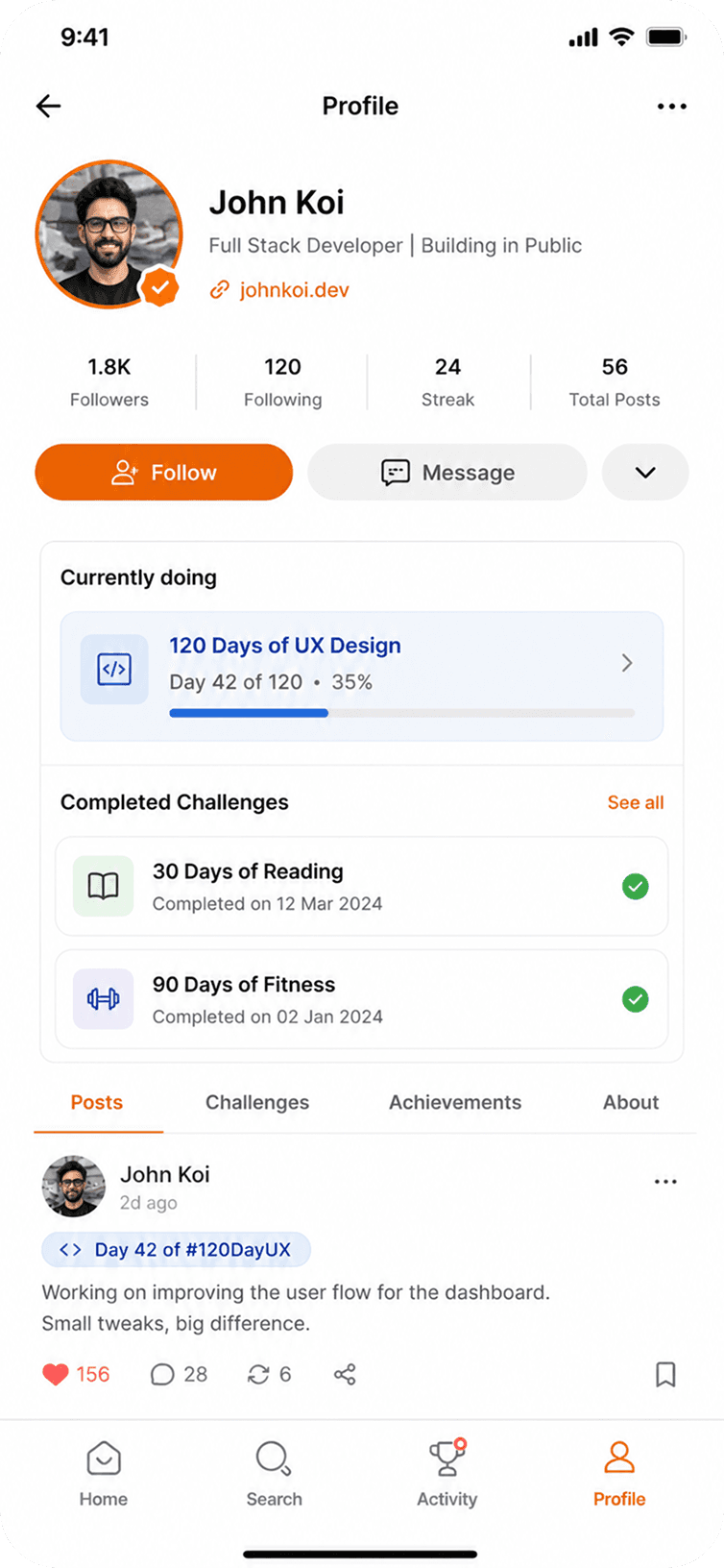
AFTER
I moved the focus to the user’s current streak and challenges, while keeping the key stats visible. The new layout feels lighter and makes it easier to see where I am and what I’m working on next.
07. CONCLUSION
Connecting the Final Dots
Designing Challenge taught me that building a habit product isn't about adding more features it's about removing friction and making the next step feel obvious.
Every design decision was measured against a simple question:
"Will this help someone come back tomorrow?"
Rather than chasing screen time, I focused on creating an experience that rewards consistency, encourages accountability, and helps users make meaningful progress every day.
Looking Back
What began as a simple idea for a social challenge app evolved into a deeper exploration of behavioral design. I learned that lasting habits aren't built through motivation alone—they're built through thoughtful product decisions that reduce friction, reinforce progress, and make returning feel natural.
Lessons I'll Carry Forward
This project reshaped the way I approach product design. Instead of asking, "How can we make users spend more time here?" I now ask, "How can we make coming back tomorrow feel effortless?" That mindset designing for long-term behavior rather than short-term engagement is something I'll carry into every product I build.